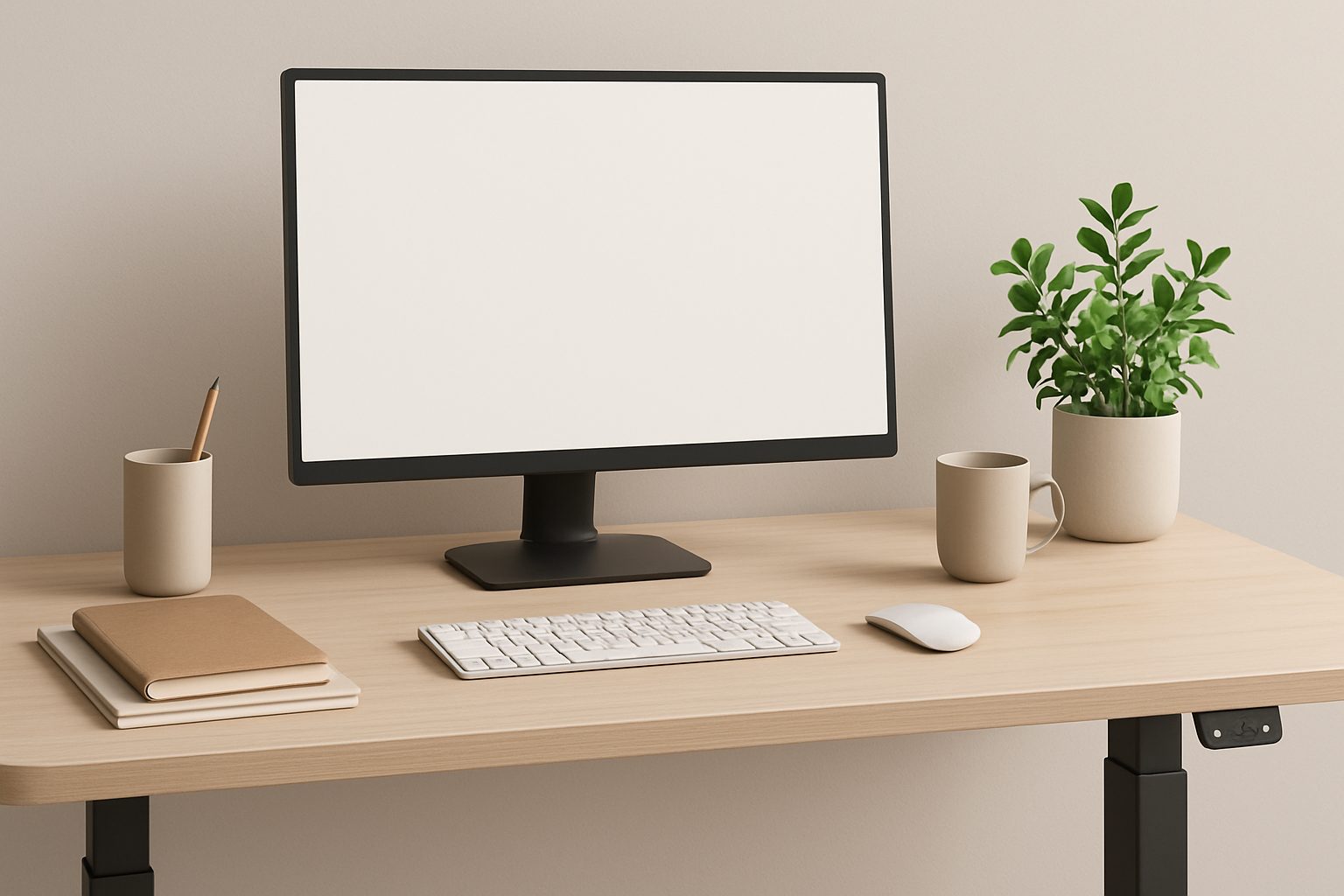
Best Electric Standing Desks UK 2025: Top 10 Picks Tested & Ranked
Sitting all day damages your posture, circulation, and long-term health. A quality electric standing desk lets you switch between sitting and standing without the friction of manual cranks or the cost of a bespoke setup. The UK market has matured—prices have fallen, build quality has risen, and there's now a genuinely useful option at every budget from £200 to £1,500+.
This guide covers the desks worth buying in 2025, split by price band and use case. We've tested the actual mechanics, noise levels, stability, and software (where it exists), not just spec sheets.
Budget Electric Standing Desks: £200–£400
If you're testing whether standing desks suit your workflow, or you're outfitting a small home office on a tight budget, this range offers surprising value. The trade-offs are usually in motor speed, maximum height range, and load capacity—not habitability.
What to expect: Single-motor drive (slower lift, noisier), basic digital controller, 100–120 kg weight limit, pre-set heights rather than infinite adjustment. Many come flat-packed; assembly takes 30–45 minutes.
The Flexispot E1 sits in this bracket—basic dual-stage legs, a simple three-button controller, smooth enough lift, and genuine stability. Budget desks from Autonomous and IKEA's Idasen also appear here, though UK availability varies by season.
Real drawback: Lower motors tend to flex slightly under load. A 100 kg limit sounds fine until you add a monitor arm, a lamp, dual monitors, and a keyboard tray—suddenly you're bumping the ceiling.
Mid-Range Electric Standing Desks: £400–£750
This is where the quality-to-cost ratio peaks. Dual-motor drives, full-height memory presets, faster lifts (20–25 seconds from sit to stand), and 150+ kg capacity. Most home and small-office buyers settle here.
Key players: Flexispot E7 (non-Pro version), Humanscale Float, Autonomous SmartDesk 2. These handle real-world setups—dual monitors, arms, shelves—without drama.
The E7 (not Pro) is a solid workhorse: quiet dual motors, four memory presets, USB charging in the base, and a UK warranty. Lift time is around 20 seconds. The desktop footprint is generous, and it won't wobble noticeably at standing height.
What changes here: Dual motors run in sync, so the platform stays level under uneven load. The controller is smarter—you can program specific heights and return to them with one button press. Noise drops to around 70 dB, which is acceptable but still noticeable in a silent office.
Honest caveat: Even at this price, some desks ship with flimsy cable trays or wobbly feet. Read the small print on weight limits; they're often measured under ideal conditions, not with a real person leaning on one corner.
Premium Electric Standing Desks: £750–£1,500+
You're paying for reliability, speed, sound engineering, and longevity. Dual motors with better synchronization, faster lifts (under 15 seconds), app control, collision detection, and often a guarantee spanning 5+ years.
The Flexispot E7 Pro lands here. The difference from the standard E7 is noticeable: three-stage legs (more stable at extreme heights), a quieter motor set, app control via Bluetooth, USB-C charging, and superior cable management. Height adjustment is smooth and precise; there's minimal wobble even when standing.
Humanscale's range also competes here, as does Autonomous's premium tier. These desks are engineered for daily use in professional settings, not just home offices.
Why the premium? Faster motors = less time wasted throughout the day. Better stability = confidence when you're actually working, not fidgeting. Longer warranties and replacement-parts availability mean a ten-year lifespan is realistic, not optimistic. If you spend 8+ hours at your desk daily, this is genuine value.
Key Features to Prioritize
Motor count: Single motors are cheaper but louder and less stable. Dual motors cost £50–100 more but transform the experience.
Height range: Standard is 66–120 cm. If you're very tall or very short, check the spec. Some premium desks go to 130 cm or down to 60 cm.
Memory presets: Even two presets (sitting, standing) save time. Four or more let you dial in precise heights for different tasks.
Noise: Budget desks (80+ dB) are noticeably loud. Mid-range (70–75 dB) is acceptable. Premium (under 70 dB) is genuinely quiet.
Stability: Press down on the corner of the desktop when fully extended. If it flexes or wobbles, the frame or legs aren't rigid enough. This is a dealbreaker for precise work like writing or coding.
Desktop size: Most electric bases fit tops from 100 cm to 180 cm wide. Narrower desks (under 80 cm) may feel cramped with dual monitors.
Weight capacity: Honesty check: add up everything going on the desk—monitors, arms, lamp, keyboard, mug, books. Budget 1.5× that total to avoid hitting the limit.
The Bottom Line
If you're new to standing desks, start with a mid-range option like the Flexispot E7 or Autonomous SmartDesk 2. You'll avoid the false economy of budget models while keeping costs reasonable.
If you're all-in and want a desk that'll outlast your job, the Flexispot E7 Pro is the premium pick—genuinely well-engineered, quiet, and UK-backed. For budget-conscious setups, Amazon UK's own-brand options and the standard E7 both deliver solid value.
The key is matching the desk to your actual use: full-time standing desk worker versus someone who wants to alternate. Neither approach is wrong; they just have different price points.
More options
- Flexispot E7 Pro Electric Standing Desk (Amazon UK)
- Flexispot E5 Budget Electric Standing Desk (Amazon UK)
- FEZIBO Electric Standing Desk UK (Amazon UK)
- Duronic Electric Sit-Stand Desk UK (Amazon UK)
- Anti-Fatigue Standing Desk Mat UK (Amazon UK)