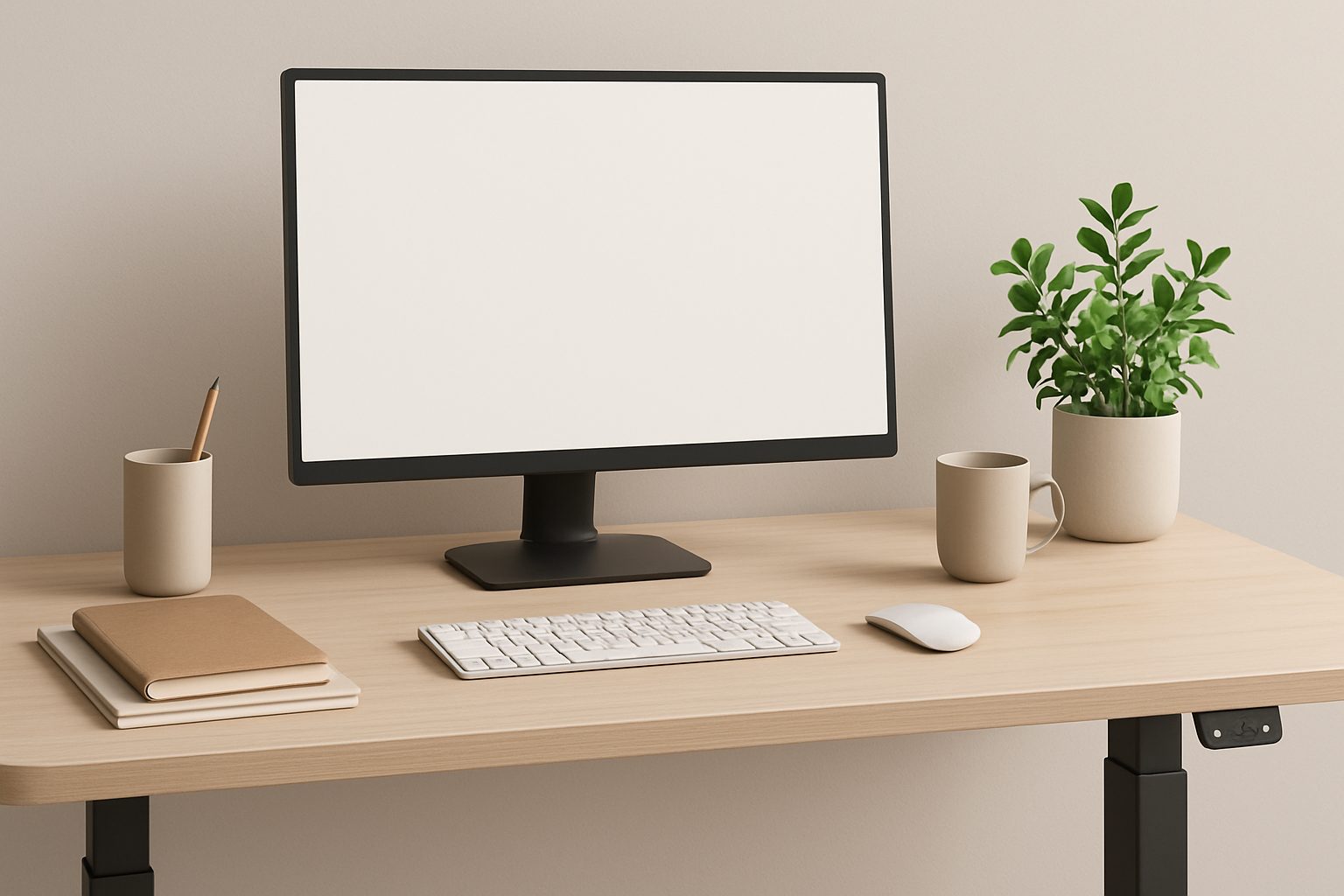
Are Electric Standing Desks Worth It in the UK? (Honest Verdict 2025)
If you've spent the last few years at home or in an office, you've probably heard the promise: standing desks are the answer to back pain, poor posture, and sedentary sluggishness. The electric ones especially seem like the solution—press a button, adjust height, look healthier. But are they actually worth the £500–£2,000 investment? The honest answer is: sometimes.
The Health Claims, Properly Unpacked
The NHS and health authorities do recognise that sitting for prolonged periods increases risk of musculoskeletal strain. The NHS guidance on office ergonomics recommends changing posture regularly—standing, sitting, moving—rather than staying in any single position all day. That's the genuine benefit of an electric standing desk: it makes it easy to switch positions without wrestling with manual cranks.
What they won't do: cure back pain, dramatically boost your metabolism, or undo years of poor posture overnight. You still need proper desk height, monitor placement, and chair support when you're seated. An electric standing desk is a tool that facilitates better habits, not a magic fix.
The Price Question
Electric standing desks in the UK typically cost £600–£1,800 for a decent model with dual motors and 1–1.5 metre width. A basic manual crank desk runs £150–£400. That's a significant premium.
The price reflects real engineering: dual motors are quieter and faster than single motors, better load capacity means less wobble at full height, and reputable brands offer 5–10 year warranties. Cheap imports (£300–£500) often use single motors, have wobbly frames, or fail within 18 months. You do get what you pay for here.
If your budget is tight, a stationary standing desk or a manual crank is a legitimate alternative. The health benefit comes from moving between positions, not from how smoothly you move.
Reliability and Build Quality
This is where assumptions often fail. Electric standing desks aren't inherently more prone to failure than static furniture, but they're more complex. The motor, control box, and memory presets can malfunction—usually around year 4–6 with budget models, or year 7+ with solid manufacturers.
Common issues: motors losing power in cold rooms (they're less efficient below 5°C), control boxes failing after power surges, wobbling frames if the base isn't properly reinforced. None of this is inevitable, but it does happen. Factor in repair costs (£150–£300 for motor replacement) or the hassle of returns within warranty.
Brands with UK distribution and customer service exist and are worth the extra cost. Ones importing directly from Asia with no local support? That's a gamble.
When a Standing Desk Actually Makes Sense
You'll genuinely benefit from an electric standing desk if:
- You spend 6+ hours daily at your desk and currently sit the entire time
- You have access to somewhere quiet to use it (some models are noisier than others, and vibration is annoying in shared spaces)
- You're willing to adjust height 3–4 times per day; if you'll just leave it at one height, it's not solving the problem
- Your workspace has power and room for a larger footprint (they're bulkier than standard desks)
- You can afford one without financial strain; this isn't an essential purchase
If you're already standing part-time, do stretches, or take regular breaks, you might not notice much difference.
What to Actually Check Before Buying
Height range: Look for desks that reach 65–70cm when sitting and at least 115–120cm when standing. Some budget models have surprisingly narrow ranges, limiting who can use them.
Motor noise: Electric desks range from quiet whisper (30–35dB) to noticeable hum (45–50dB). Visit a showroom if possible, or buy from retailers with good return policies.
Memory presets: Useful if you share a desk or frequently adjust for ergonomic positions. Less essential if you're the only user.
Cable management: Desks that hide cables neatly within the frame are easier to work with long-term.
Warranty: Five years minimum. Anything less is a red flag.
The Real Verdict
An electric standing desk is worth the investment if you'll actually use the height adjustment regularly and you can afford a quality model. It's not a shortcut to better health—posture, stretching, and movement matter far more. It's a tool that removes friction from a healthy habit.
If you're buying one expecting it to solve back pain or transform your fitness, you'll be disappointed. If you recognise that sitting in one position is uncomfortable and you want an easy way to switch things up throughout the day, it's a sensible purchase.
The real savings come from avoiding cheap models that fail quickly, and from committing to actually using the feature. A £1,200 desk you adjust four times a day is better value than a £600 desk you use as a very expensive table.
Narrowed down on whether one suits your setup? Our guide to the best-value standing desks in the UK walks through specific models, height ranges, and where actual savings come from rather than marketing hype.
More options
- Flexispot E7 Pro Electric Standing Desk (Amazon UK)
- Flexispot E5 Budget Electric Standing Desk (Amazon UK)
- FEZIBO Electric Standing Desk UK (Amazon UK)
- Duronic Electric Sit-Stand Desk UK (Amazon UK)
- Anti-Fatigue Standing Desk Mat UK (Amazon UK)